




What Is Nock Tuning—and Why You Don’t Need It with Day Six Arrows

With most other arrows on the market, you may notice that out of a dozen arrows, a couple just won’t hit with the rest.
If you were to rotate the nock 90° or 180°, shoot again—and suddenly those same arrows are grouping perfectly. That’s nock tuning in action.
So, what’s happening here, and why does it matter?
The Root of the Problem: Arrow Inconsistency
To understand nock tuning, you must understand how carbon arrows are made.
Arrows are built as carbon fibers are wrapped around a steel mandrel, then compressed and heated to cure. Once finished, the shaft is removed—but it’s not always perfectly uniform.
Think of it like a paper towel roll:
- The inner tube is perfectly round
- But as layers build, the shape can become slightly uneven
That’s essentially what happens with most carbon arrows. The thickness of the wall can vary slightly around the shaft.
Why That Affects Accuracy
Arrow flight depends on consistency.
If an arrow flexes the same way every time, it will impact the same point. That’s why spine matters—you wouldn’t mix 300 and 350 spine arrows because they flex differently.
But here’s the catch:
An arrow with uneven wall thickness is “out of round” and can behave like two different spines in one shaft:
- One side acts stiffer
- The other side acts weaker
The arrow may be a 300 spine stiffness on one side and a 350 spine stiffness on the other. That’s why rotating the nock changes how the arrow flies—you’re aligning the shaft differently relative to the bow’s force.
This is exactly why most arrows (the vast majority on the market) benefit from nock tuning and your dozen arrows don’t all hit in the same place.

Why It Becomes a Bigger Problem with Broadheads
With field points and fletching, you’re seeing the best-case scenario for arrow flight.
But once you screw on a broadhead, everything changes.
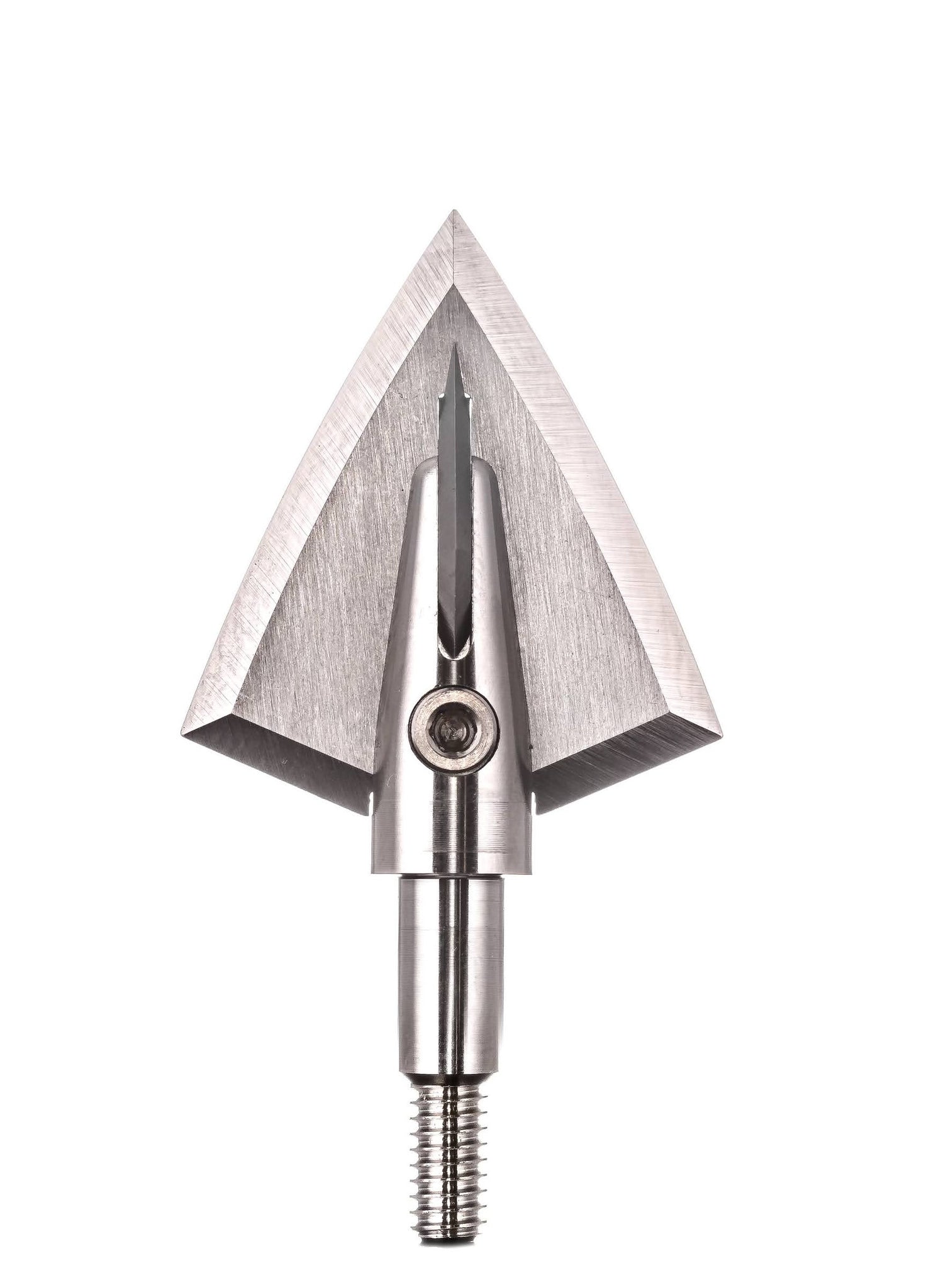
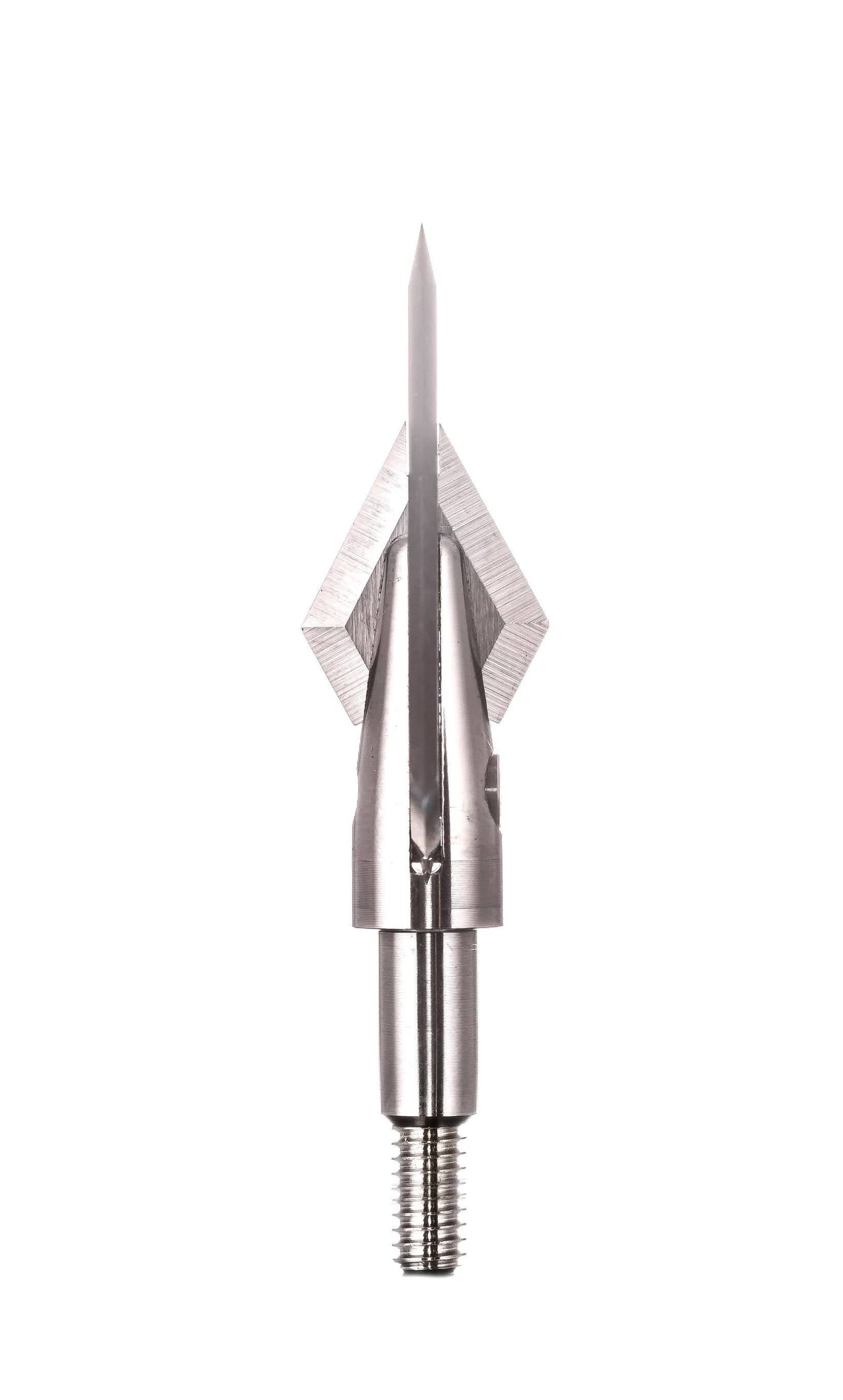
A broadhead adds steering to the front of the arrow. Any inconsistency in the shaft gets amplified, which is why:
- Arrows that grouped before can suddenly scatter
- Small imperfections turn into big flight issues
That’s not something you want when it matters.
How Day Six Solves It
At Day Six, we take a different approach.
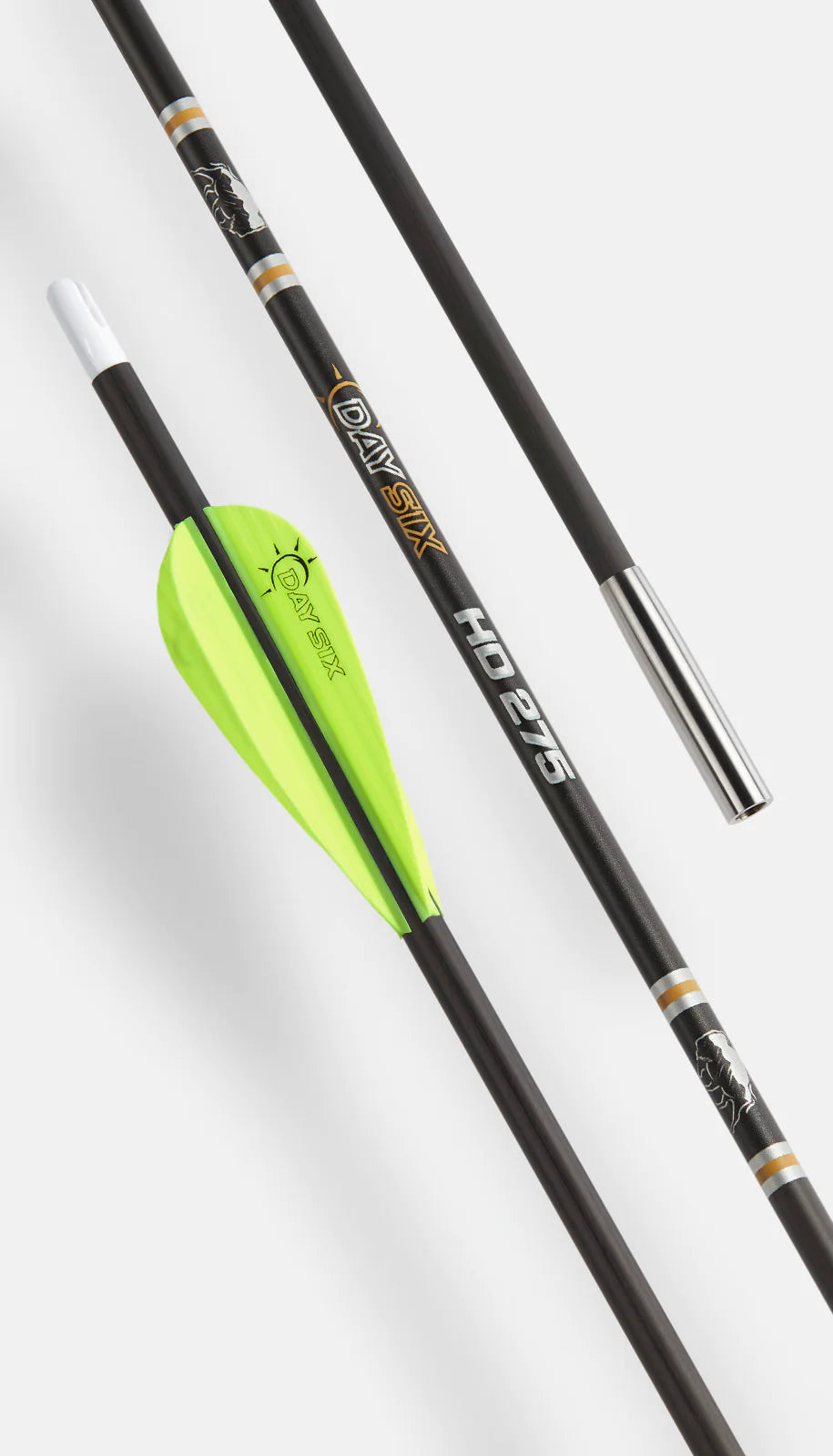
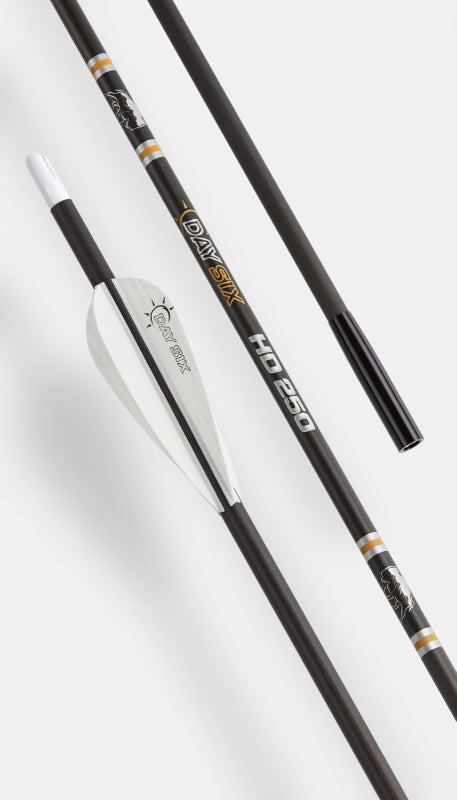
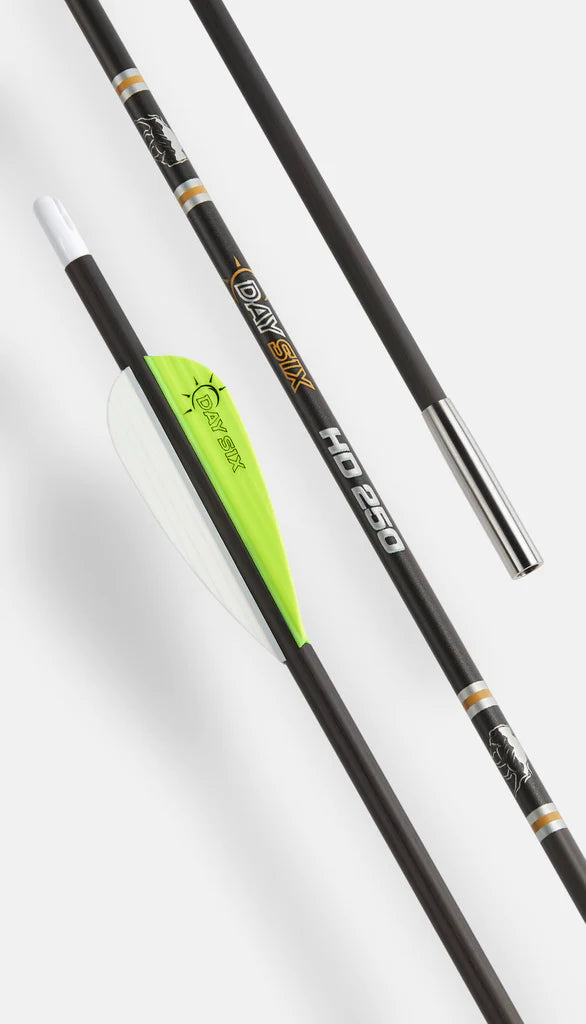
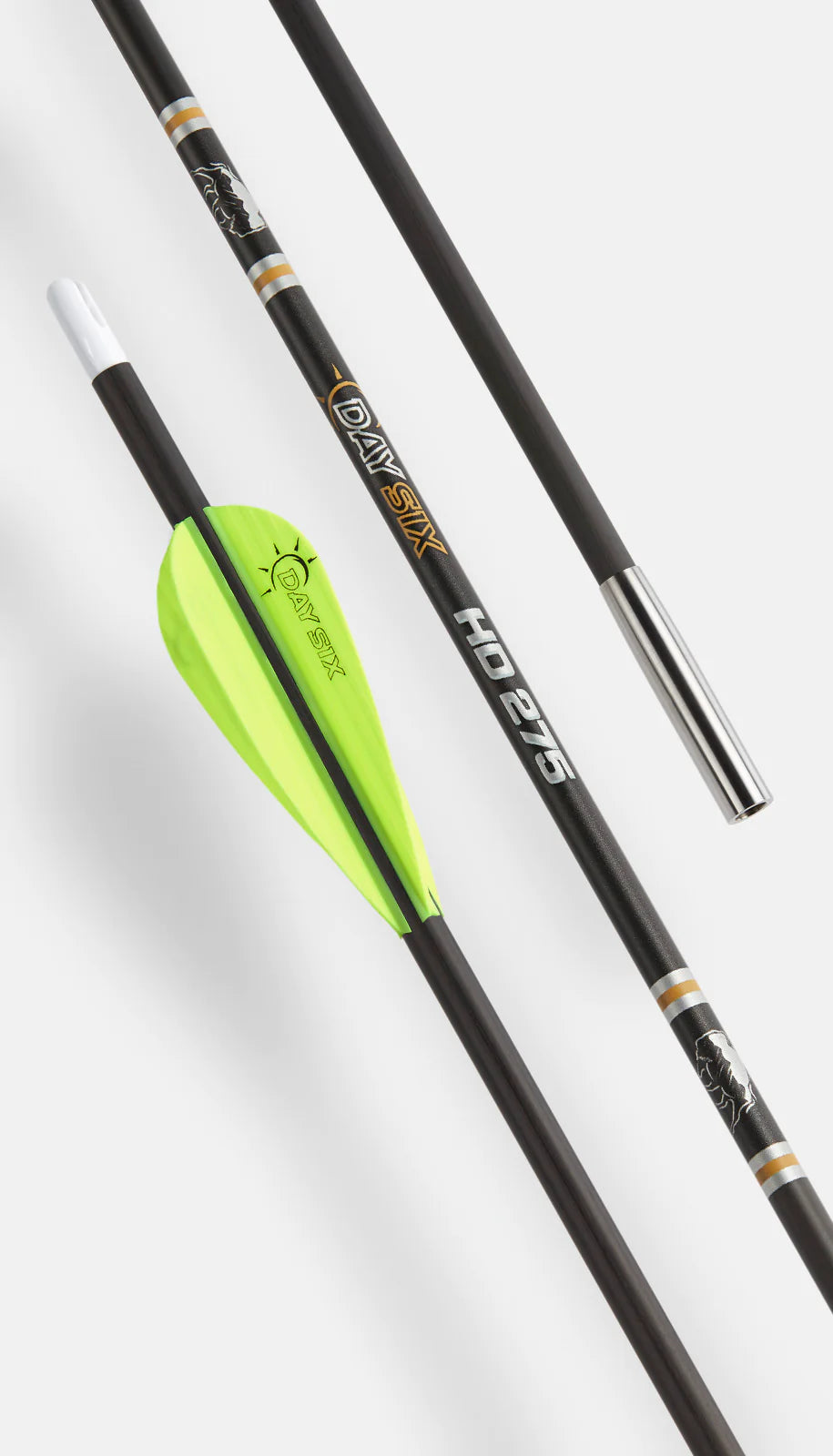
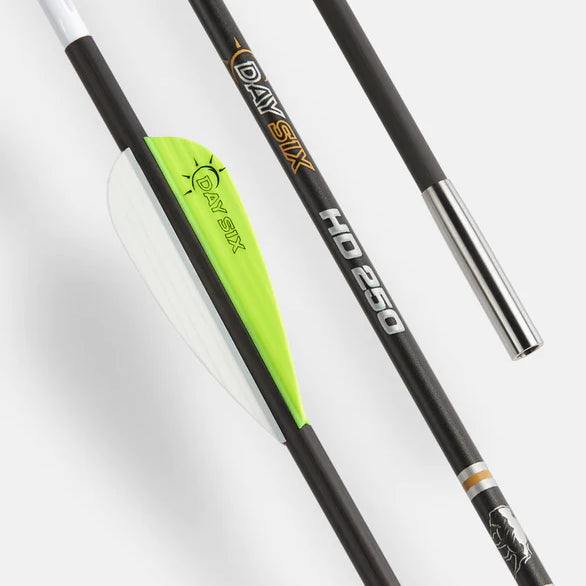
Without getting too deep into our proprietary processes, we add an extra manufacturing step that trues the shaft this creates:
- Consistent outside diameter
- Uniform wall thickness
- No “stiff” or “weak” side
The result?
You don’t need to nock tune because there’s nothing to tune around as we don’t have a stiff and a weak side producing consistent broadhead flight as the result.
With DAY SIX every arrow reacts the same, no matter how it’s oriented, which leads to constituency right out of the box. Your dozen arrows all group.
What Really Matters
Perfect arrow flight is everything.
Penetration is driven overwhelmingly by how well your arrow flies. If your arrow isn’t flying true, nothing else matters.
So, it only makes sense to start with equipment that removes variables—not adds them.
We’re incredibly grateful for your support and the opportunity to keep building the best gear for serious hunters and we are blessed to get to do this every day.
—Day Six